
The Significance of Primary Care for Chronic Disease Management
December 31, 2025
Should I Go to Urgent Care or the Emergency Room?
January 2, 2026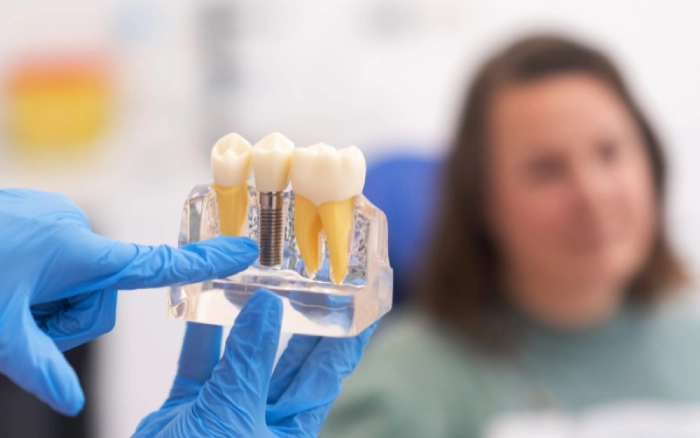
Dental implants are an effective solution for replacing missing teeth due to their durability and natural appearance. They consist of a titanium post that is surgically positioned into the jawbone beneath the gum line, allowing a dentist to mount replacement teeth or a bridge into that area. Because they fuse to your jawbone, they provide stable support for artificial teeth, and they won’t slip or shift in your mouth. Here is more information on these dental devices, how long they typically last, and the factors that influence their lifespan:
What Is a Dental Implant?
A dental implant is an artificial tooth root. It is a small, screw-shaped titanium post that allows bone to grow around it. The structure of a dental implant consists of three main parts: the implant body, the abutment, and the crown. The implant body is the post surgically placed in the jaw, the abutment is the connector piece that sits on top of the implant body, and the crown is the visible part of the tooth, custom-made to match the color and shape of natural teeth.
What Is Their Lifespan?
One advantage of these dental devices is their longevity. The implant screw itself can last a lifetime with proper oral hygiene and regular dental checkups. The titanium post is resistant to decay and integrates with the bone, and this creates a permanent bond. Maintaining good oral health practices can extend the life of the restoration.
How Do Implants Work?
Dental implants function by mimicking the structure of natural teeth. When the titanium post is inserted into the jawbone, a process called osseointegration begins. This biological process involves the bone cells attaching directly to the titanium surface, locking the implant into place.
Once osseointegration is complete, the implant becomes a sturdy anchor for the artificial tooth. This stability allows the implant to withstand significant chewing forces, similar to natural teeth. Because the implant stimulates the jawbone through chewing pressure, it also helps prevent the bone loss that may occur after tooth extraction.
What Does the Process Involve?
The process typically occurs in multiple stages over several months. The dentist first performs a comprehensive evaluation, including X-rays and 3D images, to determine if there is sufficient bone structure to support the implant. If bone density is insufficient, a bone graft may be required before the implant placement.
The surgical placement involves inserting the titanium post into the jawbone, followed by a healing period of several months to allow for osseointegration. Once the implant has fused with the bone, the abutment is placed, and the custom crown is attached. The entire timeline varies depending on the individual’s healing speed and the complexity of the case.
What Are the Benefits?
Dental implants offer both functional and aesthetic advantages. One primary benefit is the preservation of jawbone density and facial structure, which can deteriorate when teeth are missing. Implants provide the necessary stimulation to keep the jawbone healthy and strong.
These dental devices do not require altering adjacent healthy teeth. This preservation of natural tooth structure contributes to better long-term oral health. Patients may report improved comfort and speech, as implants function like natural teeth.
Consult a Dentist Today
Dental implants represent a long-term improvement in oral health and quality of life. With proper care, the implant post may last a lifetime, providing a stable foundation. If you are evaluating tooth replacement options, schedule a consultation with a qualified dental professional. They can evaluate your specific needs and determine if you are a suitable candidate for dental implants.