
How Massage Therapy Can Aid in Muscle Recovery
December 1, 2025
Understanding the Connection Between Neuropathy and Foot Health
December 1, 2025
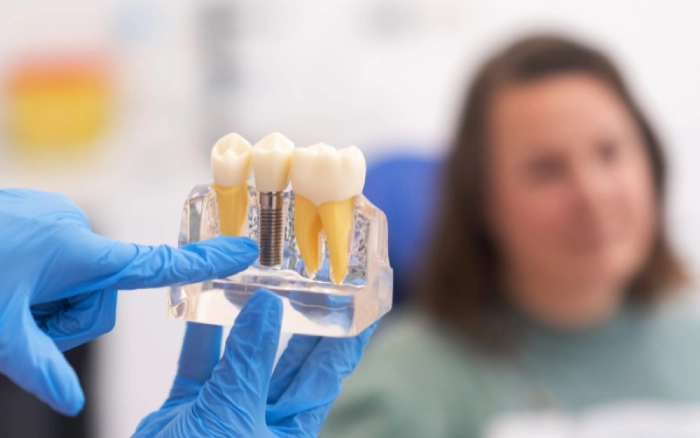
Dental implants help to replace missing teeth by anchoring an artificial root into the jawbone, providing a stable base for a custom restoration. A single implant may support a crown, while multiple implants may hold a bridge or partial denture, depending on the treatment plan. Each restoration type uses the same basic structure but differs in design and function. These variations allow dentists to match the restoration to the spacing, durability, and structural needs of the patient.
Implant Structure Overview
Dental implants rely on three connected components that work together to replace a missing tooth structure: body, abutment, and restoration. The implant body attaches to the jawbone and functions as the foundation for the restoration. After the body fuses to the jaw, the dentist attaches the abutment to the implant body to hold the crown, bridge, or denture.
The abutment securely attaches the implant to the surface restoration piece.Once placed, the abutment allows accurate impressions or digital scans to capture the dimensions needed for fabricating the restoration. The finished restoration is then created to match the existing teeth and the spacing of the treated area.
Restoration Options Explained
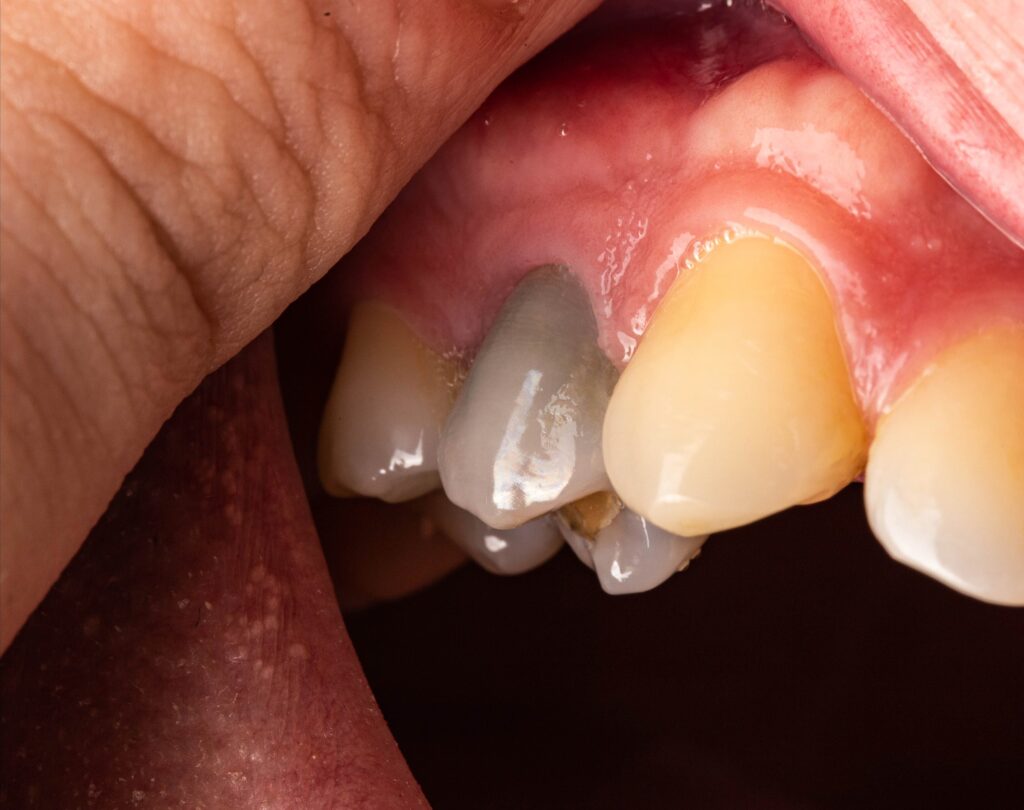
A crown on a dental implant replaces a single missing tooth and is shaped to match the surrounding teeth. This approach may be used when one tooth is absent but the remaining teeth adjacent to the space are intact. The result is free-standing and restores spacing without relying on neighboring teeth for support.
Implant-supported bridges replace multiple consecutive missing teeth by anchoring the restoration to two or more implants instead of natural teeth. This method may maintain stability when several adjacent teeth are absent, since the implants hold the structure rather than relying on enamel like veneers do. Bridge design varies with the number of missing teeth and the spacing between implants. This creates a unified, permanent restoration without the need for individual implants under each replacement tooth.
Partial dentures supported by implants can help when several teeth across the dental arch are missing but full-arch replacement is not required. Implants give the denture additional retention points, which may improve stability compared to traditional designs. The denture fits over attachments connected to the implants, allowing it to sit securely while still being removable. This option may accommodate changes in tooth distribution or future adjustments.
Steps in the Implant Process
Once the implant body is placed in the jawbone, it takes 6-9 months for the implant and jawbone to ossify, or fuse, completely. The abutment screws into the internal portion of the implant and establishes the shape needed for the restoration. Once they place and secure both the body and the abutment, the dentist may take impressions or scans and begin fabricating the restoration.
Fabrication involves creating the crown, bridge, or partial denture to match the treatment plan and the patient’s existing teeth. The materials may vary depending on durability needs and aesthetic goals. Final placement follows after all adjustments are complete.
The dentist attaches the restoration to the abutment, aligning it with neighboring teeth to maintain normal bite and function. This completes the reconstruction of the tooth or teeth being replaced.
Learn More About Dental Implants
For more information about dental implants, consult your dentist to see if you are a good candidate and which options may fit your needs. Dental implants offer multiple options to replace missing teeth with crowns, bridges, and partial dentures. Treatment steps produce a customized result based on accurate measurements and fabrication methods.